
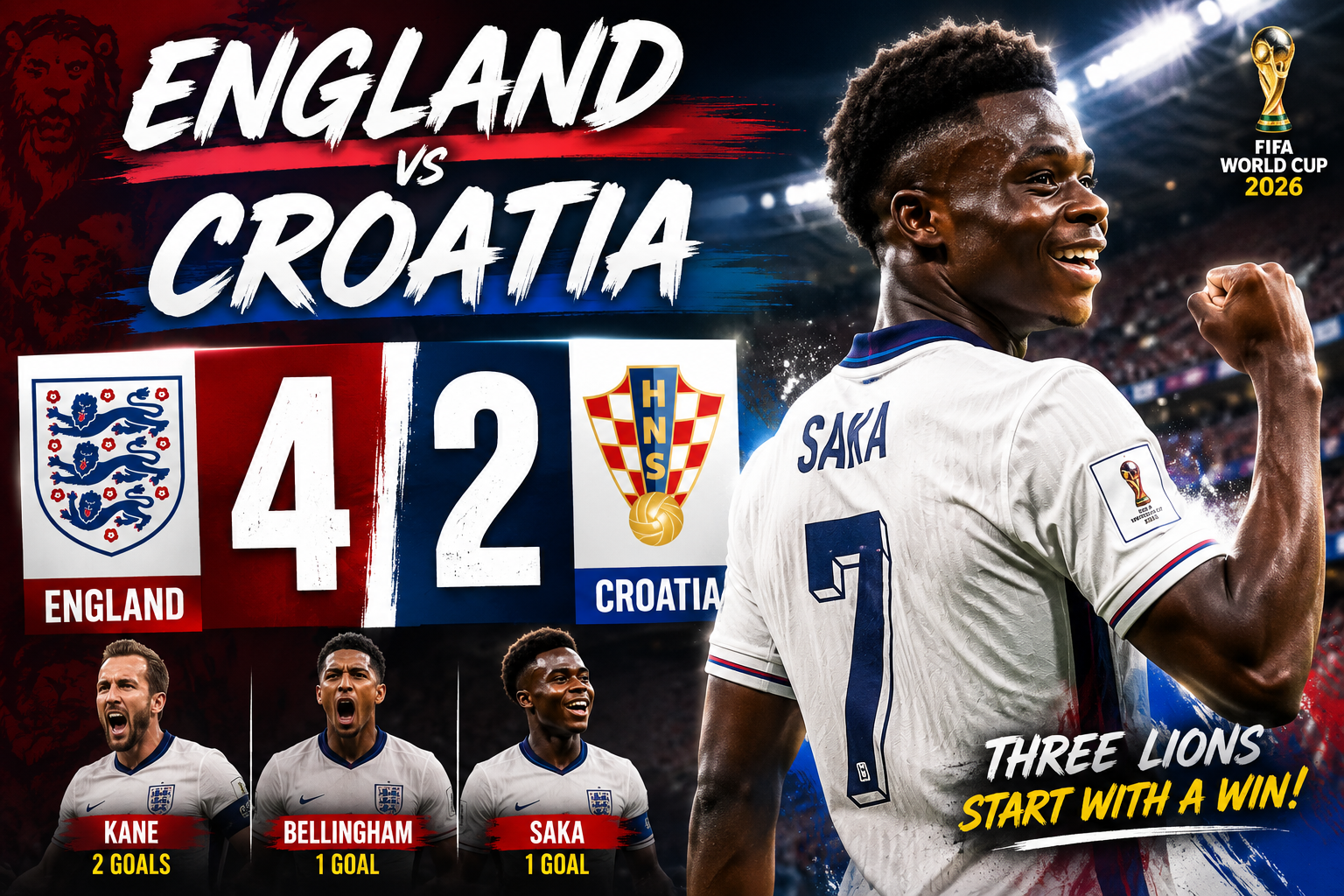
The meeting between England and Croatia at the 2026 World Cup was exactly the kind of game fans had been dreaming about ever since the group stage draw was made. It had everything: history, tactical battles, flashes of genius, defensive chaos, clinical finishing, and a stark reminder that tournament football can turn on its head in a matter of minutes. When the dust settled, England had bagged a 4–2 win in Group L, but that scoreline doesn’t really tell the full story of how wild this one actually got.
This didn’t feel like your typical group-stage opener. If anything, it had the intensity of a knockout tie that somehow got scheduled way too early. And you couldn’t escape the ghosts of 2018 hovering over everything—that painful semifinal loss to Croatia still stings for England, and even though most of the key players from that night are gone now, the psychological weight of it was impossible to ignore.
The Vibe Before Kickoff
England came into this tournament with serious hype, and for good reason. Under Thomas Tuchel, they’d been flying through qualifying, and most of the chatter leading up to the World Cup was about whether this squad finally had the right mix of attacking firepower and tactical maturity to go all the way.
Croatia, on the other hand, rolled in with their now-familiar underdog narrative. Everyone keeps saying this generation is past its prime, yet somehow they keep proving people wrong with their grit and technical brilliance. Zlatko Dalić has built a team that’s tactically sharp and utterly unafraid of big moments, and that’s a dangerous combination.
The stylistic clash was fascinating from the start:
· England had the athleticism, the depth, and the kind of attacking explosiveness that scares defenders.
· Croatia had midfield control, experience, composure, and the ability to hurt you on the counter.
What we got was a straight-up war between England’s pace and power against Croatia’s footballing IQ and poise.
England Came Out Firing
There was no feeling-out period here. England flew out of the blocks with a press that was aggressive—almost recklessly so—for a tournament opener. They weren’t interested in keeping things tight; they wanted to blow Croatia away early.
The breakthrough came through Harry Kane, who was everywhere in that first half, doing way more than just scoring goals. He converted from the spot after Croatia’s midfield got caught out by England’s direct running, and just like that, the floodgates looked like they might open.
That early phase told you everything about what Tuchel had cooked up:
- England were targeting central spaces with quick transitions.
- The wide players were tasked with isolating Croatia’s full-backs.
- Midfielders were making late runs into the box.
- Kane was dropping deep to link play, dragging defenders out of position.
England’s shape in possession often looked like a fluid 3-2-5, with full-backs pushing high and midfielders rotating around Kane like a swarm. At that point, it felt like England might physically overwhelm Croatia.
Croatia’s Midfield Fought Back
But here’s the thing about Croatia—they don’t panic. After conceding, they slowed the tempo down and started to reclaim control in the middle of the park. And as always, Luka Modrić was pulling the strings, not with speed, but with the kind of football intelligence that makes you forget he’s been doing this for what feels like forever.
Croatia spotted the cracks in England’s setup pretty quickly:
· England’s midfield was getting stretched in transition.
· The backline wasn’t staying compact.
· The press started losing its sync after the initial energy wore off.
They exploited those weaknesses beautifully. Martin Baturina’s equalizer wasn’t just a goal—it was a psychological blow. It flipped the momentum and exposed some real uncertainty in England’s defense.
From that point on, Croatia grew into the game. Their passing triangles in midfield sliced through England’s press time and again, forcing defenders into uncomfortable one-on-one situations. This stretch of the match raised some uncomfortable questions about England’s structural solidity.
England’s Defensive Issues Were Hard to Ignore
Even with four goals on the board, England never looked truly comfortable at the back. Analysts were quick to point out the vulnerability of their defensive line, especially in transition and positional play.
The problems kept cropping up in a few key areas:
- Midfield Protection: England’s defensive cover in front of the back four kept disappearing as players bombed forward. Croatia found space between the lines far too easily.
- Communication: The center-backs looked unsure when Croatia hit them on the break. There were moments when they stepped up too late or failed to track runners with conviction.
- Transition Nightmares: Petar Musa’s goal for Croatia came from exactly that—England losing possession and failing to get set defensively. It was a carbon copy of a problem that’s haunted them before.
At halftime, it was 2–2, and England suddenly looked emotionally shaky, despite all their attacking talent. For Croatia, that first-half fightback was another reminder of why they’re one of the toughest teams mentally in international football.
Then Bellingham Took Over
The game shifted the moment the second half started. Jude Bellingham produced a moment of pure brilliance—a driving run and a finish that restored England’s lead and completely changed the atmosphere.
That goal was massive for a few reasons. First, it deflated Croatia, who’d come out of the dressing room full of confidence. Conceding so early after the restart forced them into a more reactive game plan, which played right into England’s hands.
More importantly, it underlined why Bellingham might just be England’s most important player in this tournament. His performance had everything:
· physical power
· technical skill
· relentless ball progression
· pressing intensity
· and the kind of leadership that’s rare for someone his age
He played like a guy who knows this stage belongs to him now. Over and over in the second half, he drove through midfield pressure and accelerated England’s attacks. Croatia just couldn’t handle his athleticism once the game opened up.
While great midfielders often control games through passing, Bellingham is starting to control them through pure momentum. And that’s a terrifying thought for opponents.
Depth Made the Difference
Another key factor was England’s bench. As the game stretched, Tuchel’s substitutions swung things decisively. Bukayo Saka and Marcus Rashford brought fresh speed and unpredictability against a tiring Croatian side, and that’s going to be England’s secret weapon throughout this tournament.
How many national teams can bring attackers of that caliber off the bench? Not many.
Croatia stayed technically sharp, but physically they started to lag. England kept exploiting the space behind their defensive line, forcing desperate defending and last-ditch tackles. Rashford’s late goal put the game to bed and perfectly symbolized England’s advantage in attacking depth.
Kane Showed Why He’s Still the Main Man
Even with Bellingham grabbing most of the headlines, Kane’s contribution was absolutely vital. His two goals brought him level with Gary Lineker on England’s all-time World Cup scoring list, which is no small feat.
But his value went way beyond finding the net. He was:
· linking midfield and attack seamlessly
· pulling Croatia’s center-backs out of position
· creating space for others to run into
· providing a steadying presence when things got shaky
Tournament football rewards ruthless finishing, and Kane remains one of the most clinical strikers on the planet. What stood out most, though, was how sharp he looked physically. In past tournaments, he sometimes dropped too deep and left a void up front. Here, he balanced creative work with genuine penalty-box threat, and that balance could define England’s entire campaign.
Croatia Had Reasons to Hold Their Heads High
Despite the loss, there was plenty for Croatia to feel good about. They exposed England’s defensive flaws more effectively than most teams have managed recently, and their midfield quality is still top-tier. Their composure under pressure was seriously impressive.
A few Croatian players boosted their reputations:
· Modrić showed once again that his football brain is still elite.
· Baturina looked completely fearless in attack.
· Musa provided a genuine physical presence up front.
· And their keeper made several brilliant saves to keep the scoreline respectable.
The big worry for Croatia is physicality. As the game got more transitional, England’s athletic advantages became overwhelming. Croatia struggled to recover defensively after losing the ball, and that’s going to be a bigger problem against younger, faster opponents later in the tournament.
Still, you can never write this team off. With that much technical quality and tournament experience, they’re always dangerous.
Tuchel’s Gamble Paid Off
One of the most intriguing aspects of the game was how clearly it reflected Tuchel’s philosophy. England played with more attacking aggression than in previous tournaments. Under earlier managers, they’d often get cautious after taking a lead. Here, they kept pushing forward even after defensive setbacks.
It made for a thrilling spectacle, but it also exposed structural flaws.
The trade-off was obvious:
Pros:
· more fluid attacking movement
· better chance creation
· unpredictability in the final third
· making the most of England’s pace
Cons:
· defensive vulnerability
· susceptibility to counters
· midfielders overcommitting forward
· huge physical demands on the players
This match suggested England might evolve into a high-ceiling but flawed team. They can score big against most opponents, but whether they can survive against elite counterattacking sides remains an open question.
What This Meant Emotionally for England
Beyond the tactics, this result carried serious emotional weight. England have often started tournaments nervously, but this time—despite defensive wobbles—they showed real resilience when Croatia kept knocking them off balance.
Older England teams might have panicked at 2–2. Instead, they responded with real authority in the second half. That psychological growth shouldn’t be underestimated.
Fans and pundits alike were buzzing online, calling it the first truly “alive” performance from a major contender in the tournament so far. England looked imperfect, sure, but they also looked fearless. And in knockout football, that combination can be lethal.
What It Means for Group L
The win gives England early control of Group L. Croatia now face serious pressure in their upcoming games against Panama and Ghana.
England’s next match against Ghana will be an interesting test:
· Can they control a game more calmly?
· Will the defense tighten up?
· Will Tuchel keep playing this aggressively?
If England can fix their defensive issues, they could become serious tournament favorites very quickly. If not, stronger knockout opponents might punish them more ruthlessly than Croatia did.
Was This England’s Statement Game?
You could argue this was one of England’s most significant World Cup performances in years—not because it was perfect, but because it showed the team’s potential ceiling. They had elite attacking depth, midfield star power, resilience, and tactical bravery all on display.
But it also exposed problems that could become fatal deeper in the competition. That tension is what makes this England side so fascinating to watch.
Championship-winning teams are rarely flawless in their opening games. They just show enough quality to suggest they can grow into the tournament. And this performance did exactly that.
Final Verdict
England’s 4–2 win over Croatia was one of the best games of the World Cup so far, pure chaos mixed with genuine quality.
For England:
· Kane reaffirmed his world-class status.
· Bellingham looks like he could be the player of the tournament.
· Tuchel’s attacking ambition was clear.
· But those defensive weaknesses are still a worry.
For Croatia:
· Their technical quality and mentality are still elite.
· The aging core can still compete at the highest level.
· But physical limitations and defensive recovery speed are genuine concerns.
Above all, this game reminded everyone why international football hits different. The stakes feel heavier. Momentum swings feel more dramatic. Individual moments become part of national folklore almost instantly.
England walked away with three points and real excitement about what’s ahead. Croatia walked away with a loss, but also proof they can still trouble the very best. And neutrals? They walked away feeling like the World Cup had finally delivered a proper classic.

